
Direction 01
Glassy, mirror-like shine
Prioritizes a smooth reflective surface and a visibly wet finish. Clarify whether the gloss should feel fluid and light or more cushioned on the lips.
Custom lip gloss formulation manufacturer
Glassy, juicy, hydrating, lightweight and non-sticky do not describe one universal formula. Turn the intended finish, thickness, color, scent and lip feel into a brief that can be matched to a mature formula or developed as a custom sample.
Start with the result
Choose the main result before discussing ingredients or packaging. Clear, tinted, shimmer, milky, juicy, cushion, hydrating and plumping-style glosses can follow different formula directions. More than one direction can overlap, but the project still needs a clear priority for sampling.
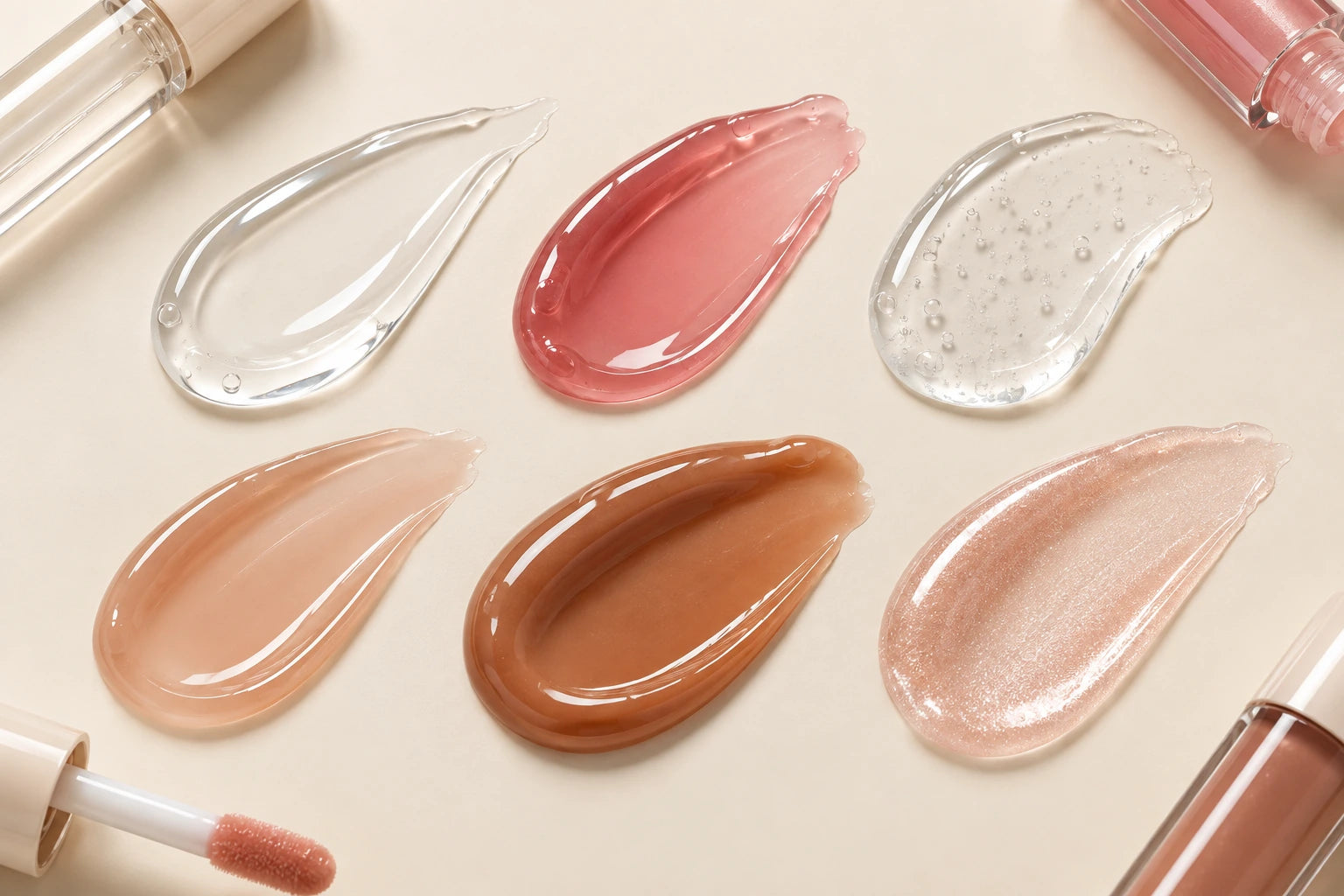
Direction 01
Prioritizes a smooth reflective surface and a visibly wet finish. Clarify whether the gloss should feel fluid and light or more cushioned on the lips.
Direction 02
Combines shine with controlled color payoff. Define whether the shade should look sheer, buildable or more visible without becoming an opaque liquid lipstick.
Direction 03
Focuses on comfortable wear and a conditioned lip feel. Explain whether hydration is the main marketing direction or simply part of the desired sensory experience.
Direction 04
A thinner, easy-to-wear direction for customers who dislike a heavy coating. The brief should still define acceptable slip, staying power and migration.
Direction 05
Creates more body and presence on the lips. Thickness, stringing, applicator pickup and the amount dispensed by the wiper must be tested together.
Direction 06
Adds visible pearl, shimmer or special-effect particles. Particle size, suspension, shade base and the applicator opening must remain compatible.
Mature or custom formula?
Most current lip gloss formulas can support lightweight, non-sticky, mirror-shine or hydrating directions. A mature base is selected against the brief and confirmed through sample evaluation.
If the project specifies a particular thickness, heavier cushion, lighter color payoff, fragrance, viscosity and special lip feel at the same time, a standard formula may not match. We recommend a custom formula route for tightly defined requirements.
01
Suitable when the priority is to launch an established gloss texture with selected shades and stock packaging.
02
Recommended when several requirements must work together and the customer expects a defined result rather than a close available option.
Describe what you mean
Words such as juicy and non-sticky are subjective. A useful brief explains what the customer should see and feel, and which compromise is acceptable.
Should the gloss spread in a thin layer, feel medium-bodied, or create a visibly thick and plush coating?
Does non-sticky mean minimal stringing, less hair adhesion, a light after-feel, or simply less tack than the reference product?
Define clear, sheer tint, buildable color or stronger payoff. “Not too dark” is easier to match with a shade or reference sample.
Name the scent family, strength and any fragrance-free requirement. A scent request may affect formula selection and sampling.
Prioritize hydration, lightweight slip, cushion, shine retention or reduced migration. Not every performance goal can be maximized at once.
What controls the result
Shine, cushion, pigment, scent, comfort and packaging performance affect one another. The final formula system must support the intended customer experience and the selected component.
Build the gloss body and influence shine, slip, cushion, clarity and the way the formula spreads across the lips.
Control thickness, body, pickup, stringing and whether the gloss feels lightweight, medium-bodied or plush.
Influence grip, migration and shine retention. More adhesion can also change tack and the perceived comfort of the gloss.
Create clear, sheer, buildable, milky, shimmer or stronger-color effects. Suspension and applicator compatibility must be reviewed.
Fragrance family, strength, flavor direction and cooling or warming sensation need to fit the base formula and target market.
The completed formula must be reviewed for its actual ingredient system, color, scent, package and intended storage conditions.
Plant oils, butters, vitamin E, moisture-supporting ingredients, peptides or sensory ingredients may be discussed, but not every material is suitable for every oil-based gloss. Exact compatibility, INCI and claim wording are confirmed against the selected formula and target market.
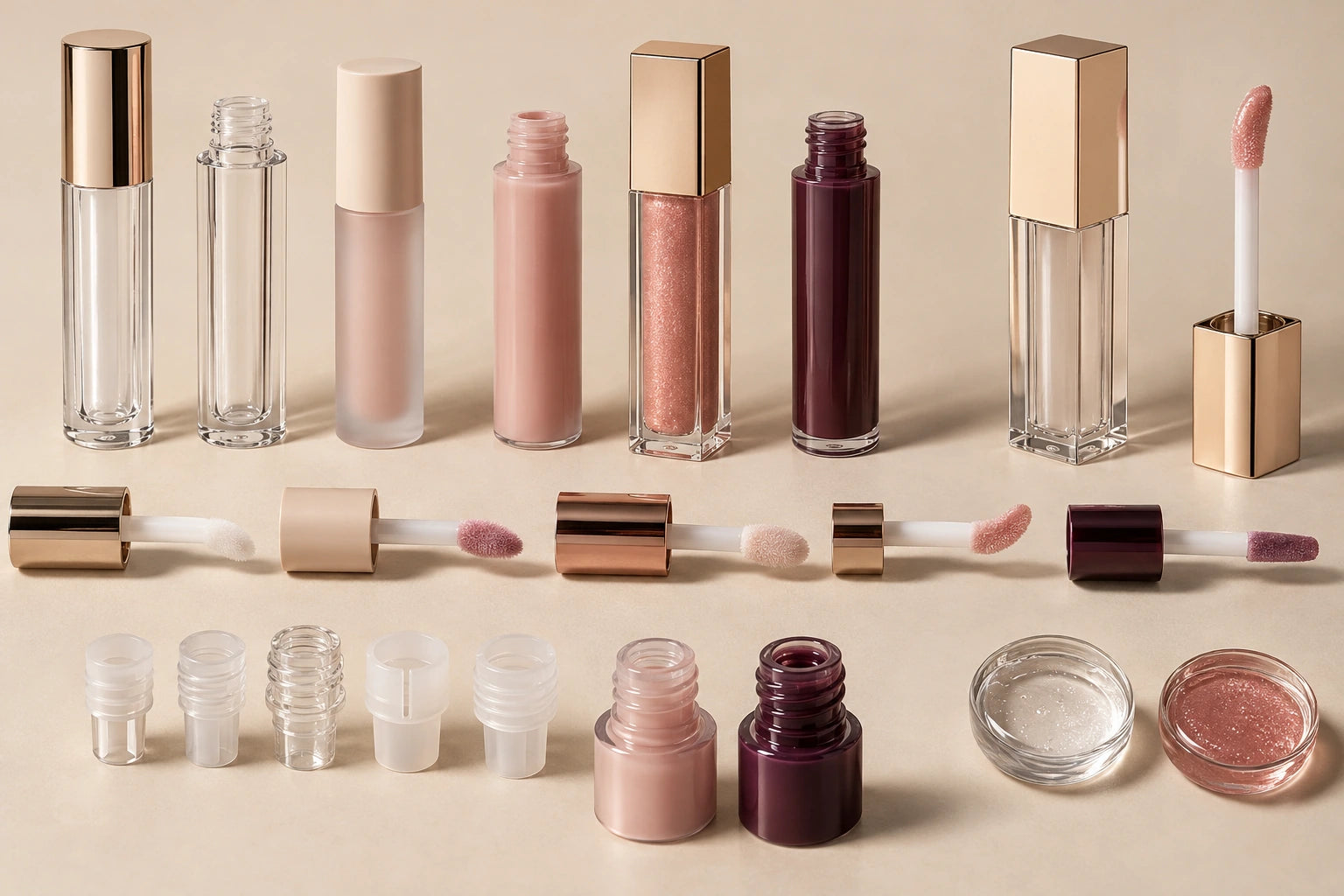
Formula and component work together
A thicker or more fluid gloss changes product pickup, wiping and filling behavior. The tube, wiper and applicator must be reviewed as a complete system.
Influences filling, flow, stringing and the amount carried by the applicator.
Controls how much formula remains on the stem and applicator after withdrawal.
Changes pickup, precision, spread and how a thick or fluid gloss is deposited.
Stem length, fill volume, neck and closure need to suit the selected component.
Shimmer or particles must stay compatible with the formula and dispensing path.
Stock logo printing differs from changing component color, finish or structure.
Most market-standard lip gloss tube and applicator styles can be sourced. For the private-label stock route, exact choices depend on current component inventory when the project is reviewed.
Development routes
The formula route is chosen after the brief is compared with an available base. More simultaneous changes normally require a higher per-shade commitment.
Route 01 · practical launch
Choose a suitable existing gloss direction, available shades or controlled shade selection, and a currently available tube for logo branding.
From 500 pieces per product and package; mix shades from 100 pieces per color.
Route 02 · defined changes
Adjust shade, color depth, scent, thickness or feel where the selected base can support the requested direction.
Normally 500–3,000 pieces per shade, depending on the number and difficulty of requested changes.
Route 03 · custom direction
Develop around a tightly defined combination of shine, viscosity, cushion, color, scent, hydration and wear expectations.
Normally 500–3,000 pieces per shade; the final route is confirmed after technical review.
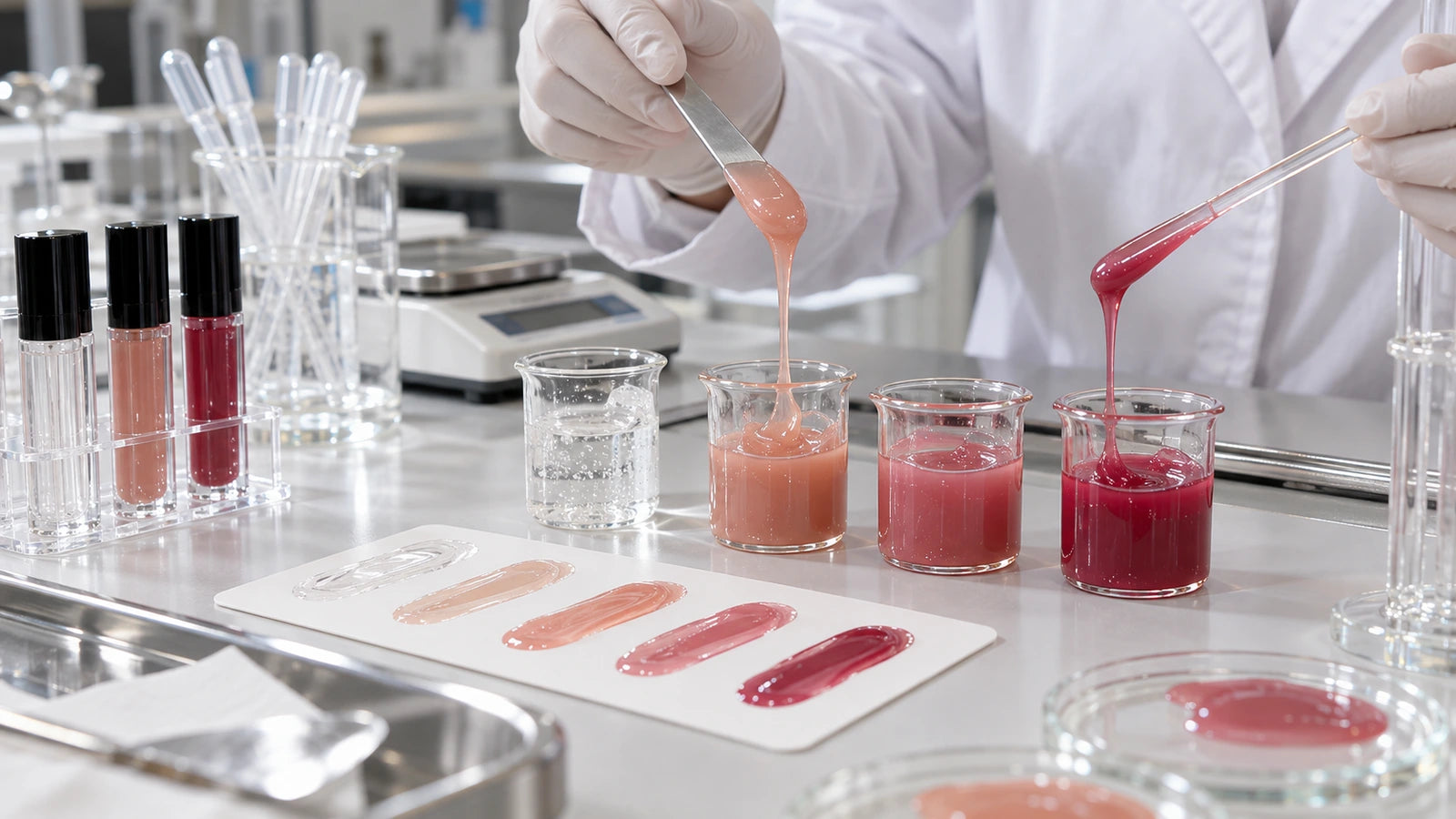
Sampling and feedback
Evaluate shine, thickness, color payoff, scent, pickup, application and comfort on the actual sample. Written feedback should identify what must change and what is already approved.
Share the finish, shade count, texture, scent, performance priorities, quantity and reference product.
We compare the brief with mature formulas and confirm whether adjustment or new development is required.
Test the actual gloss on lips and with the intended package direction; record specific observations.
Two feedback adjustment rounds are included. Approve the final sample before bulk production planning.
Common development questions
Most current lip gloss formulas can support a lightweight, non-sticky direction. Because non-sticky is subjective, we still ask what the term means for your customer and confirm the selected formula through a physical sample.
These changes can be reviewed, but several simultaneous and specific requirements may no longer fit a mature standard formula. A custom formula route is normally more appropriate when thickness, color depth, scent and skin feel all need to match a defined target.
The mature private-label route begins from 500 pieces for one product and package. Available shades can normally be mixed from 100 pieces per color.
Color matching, sensory adjustment and new formula development normally require 500–3,000 pieces per shade. The route rises with the number and difficulty of the requested changes.
Formula sampling is normally US$100–500. The first sample commonly takes 2–4 weeks and includes two adjustment rounds, depending on the development brief.
Most market-standard tube and applicator styles can be sourced. For a private-label project using stock components, the exact options depend on current inventory. The formula viscosity, wiper and applicator should be reviewed together.
Send the intended finish, thickness, stickiness level, color payoff, scent, ingredient direction, number of shades, quantity, target market, packaging reference, timing and a public reference-product link if available.
Project review
Tell us what the customer should see and feel, how many shades you need, the expected quantity, packaging direction, target market and timing. We will review whether a mature formula or custom route is more realistic.
A useful first response depends on the details in the brief. If the requirements are tightly specified, include reference products or a public link so the intended result is easier to compare.