
Formula & Claim Direction
Compare available formula directions, then confirm the exact formula, ingredient list, claims and documents for the destination market.

PRIVATE LABEL EYESHADOW DEVELOPMENT
Compare powder formulas, select matte and shimmer shades, choose a palette structure and plan the logo, artwork and launch quantity in one clear development path.
Compare available formula directions, then confirm the exact formula, ingredient list, claims and documents for the destination market.
Material, pan count, mirror, stock color and customization level affect MOQ, cost and timing.
Review available printing, foil, artwork and custom structure routes for the selected project.
FORMULA SELECTION
Select a formula that fits the market, customer preferences, price point and intended claims. Final specifications must be confirmed against the approved sample and product file.
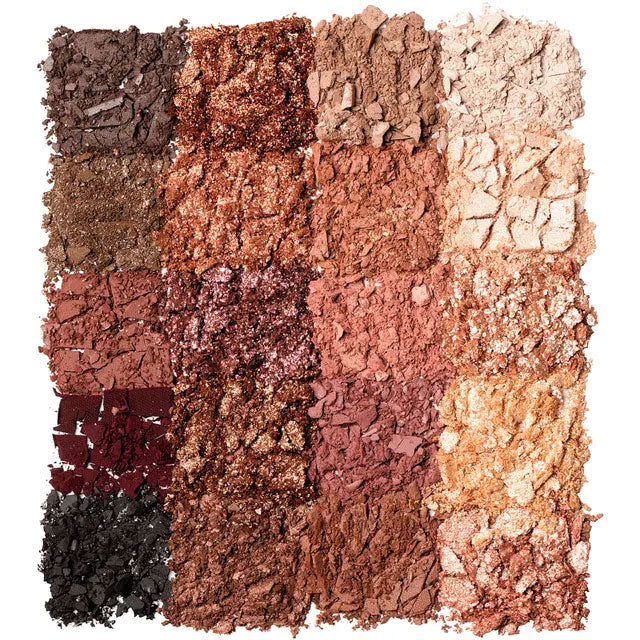
OUR TOP-RATED FORMULA
A softer daily-wear direction with matte, satin matte, shimmer, foiled and glitter options. Compare shades and verify the final formula, claims and INCI for the selected product.
Mica, Boron Nitride, Bismuth oxychloride, MagnesiumStearate, Pentaerythrityl Tetraisostearate, Diisostearyl Malate, Refined Olive Pomace Oil, Simmondsia Chinensis (Jojoba) Seed Oil, Tocopheryl Acetate, Phenoxyethanol. May Contain(+/-): Titanium Dioxide (Ci 77891), Iron Oxides(Ci 77491, Ci 77492, Ci 77499), Fd&c Red 40 Al Lake (Ci 16035), Ultramarine (Ci 77007), Fd&c Yellow 5 Al Lake (Ci 19140), Fd & C Yellow 6 Al Lake (Ci 15985), D&c Red 6 Lake(Ci 15850), D&c Red 7 Lake(Ci 15850), Black 2(Ci 77266), D&C Red 27 Lake(Ci 45410), Blue 1 Lake (Ci 42090), Ferric Ammonium Ferrocyanide (Ci 77510), Chromium Oxide Green (Ci 77288), Manganese Violet (Ci 77742).
Net Weight 0.38 OZ / 10.8 G
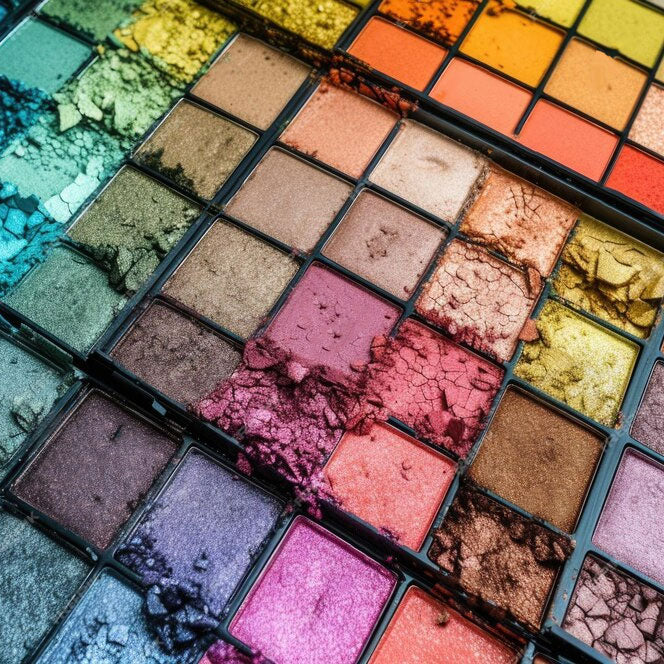
OUR PROFESSIONAL FORMULA
A professional color direction with soft matte, satin matte, shimmer, metallic and glitter options for broader artistry and stronger color stories.
*No Parabens, phthalates or mineral oil
Mica, Silica,Bismuth Oxychloride, Magnesium Stearate, Polyethylenewax, Ethylhexyl Palmitate, Dimethicone, Caprylic/Capric Triglyceride, Magnesium Myristate, Dimethicone/Vinyl Dimethicone Crosspolymer,Tocopheryl Acetate, Hydrogenated Polyisobutene, Phenoxyethanol, Polybutene. May Contain [+l-: SyntheticFluorphlogopite, Tin Oxide, Titanium Dioxide (CI 77891), Iron Oxides (CI 77491, CI 77492, Cl 77499),FD&C Yellow 5 Lake (CI 19140:1), Chromium Oxide Greens (CI 77288), D&C Yellow 10 Lake (CI 47005),FD&C Blue 1 Lake (CI 42090:2), FD&C Yellow 40 Lake (CI 16035), Ferric Ammonium Ferrocyanide (CI 77510),D&C Red 27 Lake (CI 45410), D&C Red 6 Lake (CI 15850), D&C Red 7 Lake (Cl 15850:1),Ultramarines (CI77007), FD&C Yellow 6 Lake (CI 15985:1)].
STEP 1 · SAMPLE TESTING
Mix matte, shimmer, metallic or glitter references according to the intended customer and palette concept. Compare physical samples before approving the route.
Decide whether the palette is intended for daily makeup, bridal, seasonal color, editorial looks or a specific reference direction.
Compare physical samples against the desired finish, color payoff, skin feel, price point and market requirements before approving the route.
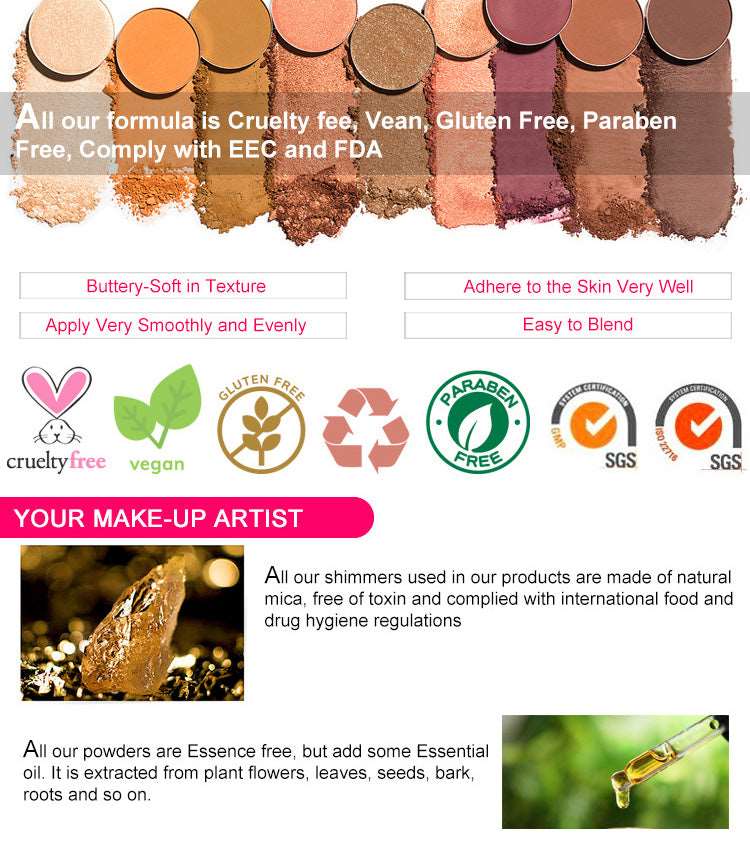
Final performance and claims depend on the approved formula, shade, testing method and market requirements.
STEPS 2–3 · PACKAGING & DESIGN
Review paperboard, plastic and other structures. Pan count, mirror, stock color, decoration and customization level affect MOQ, cost and timing.

Review available pan layouts, paperboard structures, mirrors, stock colors and artwork routes.

Compare available plastic structures and confirm component, decoration, MOQ and timing.

Embossed or debossed powder patterns can be reviewed according to the pan, mold and production setup.

Discuss cream eyeshadow formula and packaging availability for the selected project.

Review liquid eyeshadow finish, shade, applicator and packaging directions.

Confirm eyeshadow stick formula, component and customization availability.
Plan the palette shape, logo, shade names, pan layout, surface finish and pressed-powder pattern together. Provide editable artwork or high-resolution reference files.
STEP 4 · PROJECT ROUTE
Final quantities, cost and timing depend on formula, shade count, packaging and customization level.
For startup brands testing the market with available formulas and packaging.
For growing brands that need more packaging, artwork and shade planning.
For larger projects requiring custom formula and packaging development.
MARKET & DOCUMENT PLANNING
Share the selling country, sales channel, target customer, intended claims and ingredient restrictions before formula and artwork approval. Available documents and testing requirements depend on the selected formula and market.
MOQ changes with printing coverage, formula, shade count, palette structure and customization. Confirm the exact MOQ for the selected project.
The confirmed schedule follows sample, artwork, component and order review. More customized projects require a longer development timeline.
Final inner packing, export carton, breakage handling and replenishment terms should be confirmed in the order agreement.
START YOUR EYESHADOW PROJECT
Share your palette size, finish mix, shade direction, packaging idea, quantity and destination market.

SindeBella Global Brands supply a full range of eyeshadow colors with various formulas and packaging options. It is the fastest way to create your own eyeshadow line.

All Cruelty Free, Vegan and Paraben Free.
High-end Eyeshadow Formulas
The range of shadows featuring highly pigmented, long-lasting colors in a variety of finishes.
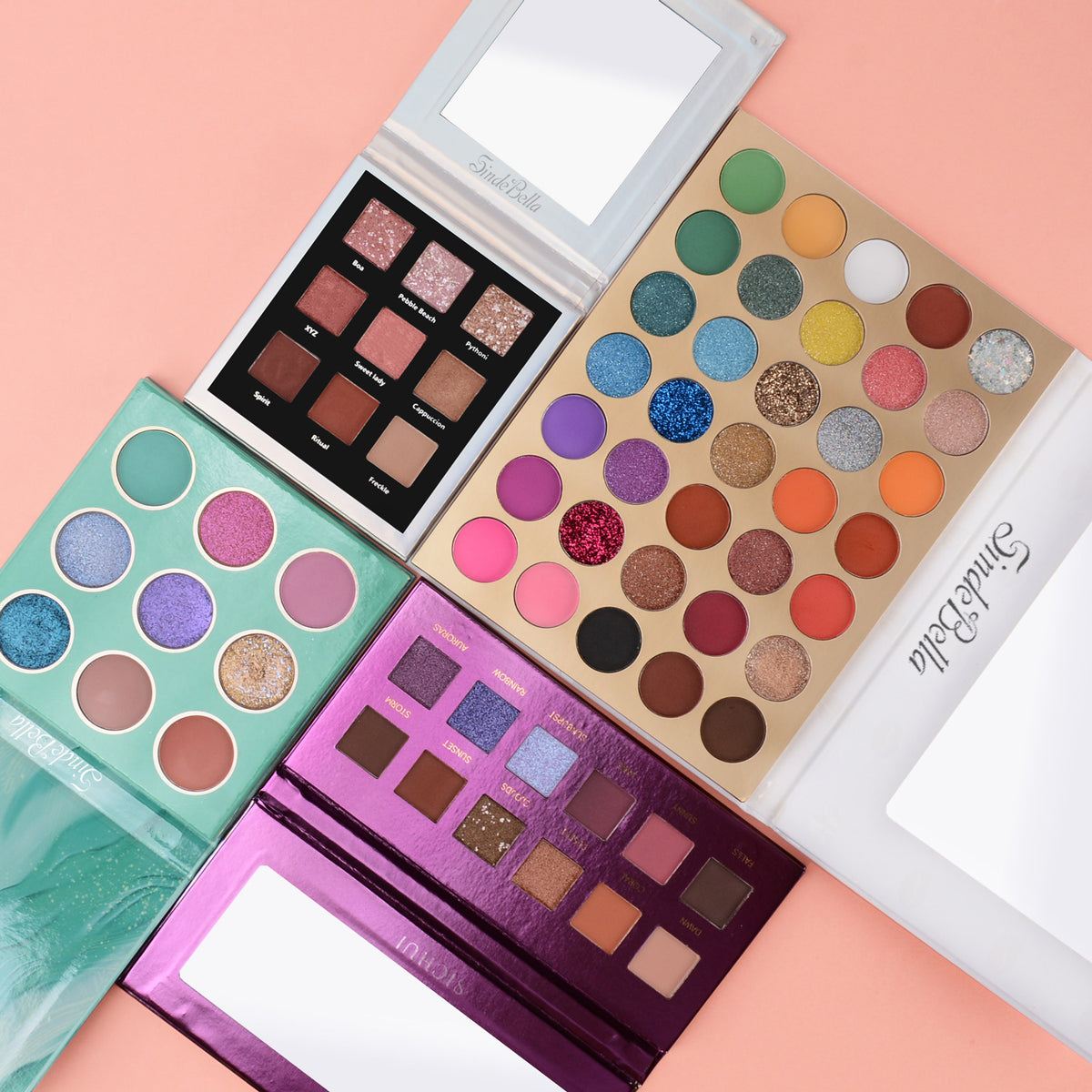
We supply various types of palettes that are made of paper cardboard, so they are environment friently. Select the one you prefer for your brand.

We mainly offer hot stamp print and UV colorful print on the palette of your selection. We can also custom make the palette according to your request.
When starting a cosmetics brand, it's important to have confidence in your product and choose a formulation that aligns with the market and customer preferences. Our company, SINDEBELLA, provides helpful information on each formulation's unique characteristics and real customer evaluations, so you can make an informed decision without having to invest a significant amount of time and money.
Our Top-rated formula

Vegan, Cruelty-Free, Free of Gluten, Alcohol, Parabes, and Latex.
Our Professional Formula
Vegan, Cruelty-Free, Free of Gluten, Alcohol, Parabes, and Latex.

Pick now from our top-rated nourishing formula 250 shades or our professional formula 170 shades.
You can select 10-20pcs single colors to test the quality, mix matte, shimmer or glitter, it depends on you.
When you satifised with our quality, you can start to decide the packaging for your selected eyeshadows.
The eyeshadow packaging types including papar book, plastic palette, metal palette and etc.
(Tip: You can order the paltte as a sample when you order sample kit.)
And the most popular are paper book. Normal Palette includes 4 wells, 9 wells, 12 wells, 15 wells, 18 wells. See below photos for reference. All palettes with a mirror, and we provide color from black, white... to rose.
If you only start from 100pcs, please select our stock palette, paper material and plastic.

High Quality Simple Paper Palette
Fix deisgn and structure, and stock colors.

High Quality Simple Plastic Palette
Fix deisgn and structure, and stock colors.
If you already have a logo, please send us your editable logo file, like PSD, PDF, or AI format, then our designer can put them into your selected palette before mass production.The logo can be silk print, UV color print, or stamp gold/silver.If you don't have a logo, you can send me your brand name, our professional designer will develop 2-3 different styles of logos for your choice after you confirm the order.
How to get a design ideas:
Tip: Search on google trends/Pinterest/Instagram.
Design: palette shape, shade name, powder shades, pressed powder logo
Contact us for more details.


Please select the plan according to your budgetary realities. As your partner we certainly would work out a solid plan.
*Please note that our minimum amount for private label is from USD 1000 per order. For each product there is a minimum quantity of 100 pieces (our standard packaigng & formula). We are not able to take on projects that do not meet our minimum order requirements.
Perfect for small brands or start-up business.
Test target market first
Start From US$ 1000
*Start from several products
Quick Ordering Process
Fast Production
High-quality Formulas
*Various Packaging Options
Good choice for growing business.
Want more customization in packaging.
Start From US$ 3000
LOW MOQ
* Competitive Price
Quick Ordering Process
Fast Production
High-quality Formulas
*More customized packaging options
Good choice for big business.
Create own formulas and packaging.
Start From US$ 10,000+
Quotation specifically offered
* Very competitive price
* High profit margin
* Custom cosmetics formula
Custom packaging design
High order quantity
Longer production period
FREQUENTLY ASKED QUESTIONS
Turn your palette idea into a project brief
Tell us the finish mix, shade story, pan layout, packaging direction, market and expected quantity. We will use the brief to discuss the appropriate sampling and development path.


