
A physical lip product sample
A finished gloss, liquid lipstick or other lip product lets the laboratory compare color, coverage, undertone and finish together. Tell us which characteristic matters most.
Custom lip gloss color matching for beauty brands
Develop a custom lip gloss shade from a physical product, existing shade, Pantone direction or image reference. We review the formula base, coverage, finish and intended packaging before confirming the practical sample route.
Start with the strongest reference
The closer the reference is to the intended finished product, the fewer assumptions are needed during the first sample.
A finished gloss, liquid lipstick or other lip product lets the laboratory compare color, coverage, undertone and finish together. Tell us which characteristic matters most.
A public product page identifies the intended market position. Availability and regional shade differences still need to be considered.
A flat color reference helps define hue, but it does not show transparency, shine, pearl or how the gloss will appear on lips.
Use it to communicate a color family and brand mood. The first physical sample becomes the real standard for further feedback.
A photo is useful for direction, but screen brightness, filters, lighting and editing can change the color. It should not be treated as an exact production standard.
Why one shade can look different
The same pigment direction can appear different after changes to formula base, coverage, pearl, applicator pickup or the container itself.
A clear base shows pigments differently from a milky or naturally colored base. Changing the base can shift depth and undertone.
A sheer gloss mixes visually with natural lip tone. Higher pigment load can look closer to the tube color but may change feel and application.
Pearl and reflective particles can make a shade look lighter, cooler or more dimensional than the base color alone.
Pickup from the wiper and applicator controls how much product reaches the lips. Review the amount your customer will realistically apply.
The same sheer shade can look different on pale, pigmented, cool or warm lips and under daylight, retail light or phone cameras.
Clear, frosted, tinted or thick-walled packaging changes how bulk color looks before application. Formula approval should use the actual sample, not the closed tube alone.
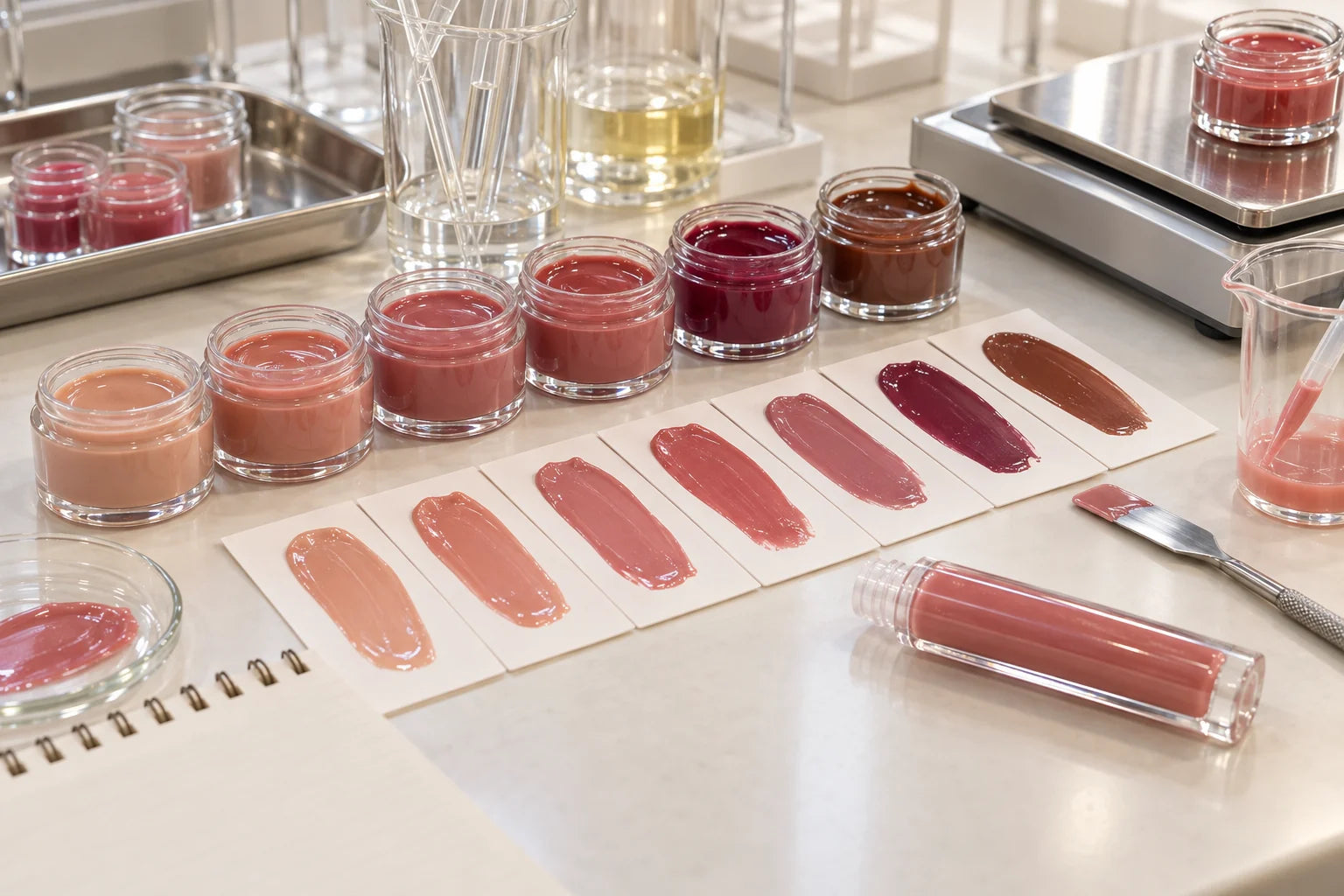
From reference to approved sample
The first sample should test a defined target—not several conflicting references at once. Feedback is most useful when it identifies exactly what should become warmer, cooler, lighter, deeper, sheerer or more opaque.
Choose the gloss texture, finish, coverage direction, scent and intended packaging before treating color as the only variable.
Provide a physical sample, product link, Pantone direction or image and explain what should be copied and what can change.
The laboratory develops the shade in the selected base and checks how the color disperses, applies and appears at the intended coverage.
Compare under consistent lighting and describe one change at a time. Final production follows the approved physical sample.
Review the physical sample
Evaluate the sample in the intended application amount and under more than one light source. A tube photo alone does not show coverage, undertone or how the shade changes on lips.
| What to review | Useful feedback | What to avoid |
|---|---|---|
| Undertone and depth | Slightly warmer, less orange, deeper by one step, or more neutral. | Make it prettier or exactly like the screen photo. |
| Coverage and payoff | Keep the shade but make one swipe more visible, or keep it sheer and buildable. | Increase pigment without confirming whether the texture may change. |
| Finish and effect | Reduce pearl, use finer shimmer, increase glass shine, or make the cream base less milky. | Evaluate sparkle and reflection from one indoor photo only. |
| Application result | Review on lips, on a neutral card and with the intended applicator amount. | Approve only from the bulk sample seen through the tube wall. |
Custom formula sampling is normally US$100–500. The first sample commonly takes 2–4 weeks and includes two feedback adjustment rounds, depending on the brief.
Choose the practical development route
Selecting available shades is different from matching a new color, and matching a new color is different from rebuilding the formula's texture, opacity, scent or ingredient system.
Use a current formula, available shades and stock packaging when the priority is faster private-label preparation rather than an exact new color match.
Private-label route from 500 pieces per product and package; available shades can normally be mixed from 100 pieces per color.
Develop a defined new color in a suitable existing formula while keeping the agreed texture, finish and packaging direction stable.
Commonly 500–3,000 pieces per shade, depending on the formula, color target and requested changes.
Use this route when the brief combines an exact color target with changes to viscosity, opacity, scent, ingredients, performance or packaging compatibility.
Final MOQ follows technical review; more tightly defined requirements normally require the higher development route.
Different products cannot be combined to reach one product MOQ. Final quantity is confirmed after the selected formula, shade count, packaging and requested changes are reviewed.
Questions before shade development
Use these answers to prepare a reference and give feedback that the laboratory can act on.
A photo can define the direction, but it is not an exact color standard because lighting, filters and screens change appearance. The first physical sample becomes the working reference for adjustment.
Usually yes when the target is another lip product, because it shows undertone, coverage and finish together. Pantone is useful for hue direction but does not define gloss transparency or application.
Tube wall, bulk thickness, natural lip tone and application amount all change the visual result. Review the intended one-swipe or layered application, not only the closed package.
A coordinated shade family can be developed, but each formula system displays pigment differently. The goal is a visually coordinated result rather than assuming one identical pigment recipe across products.
Custom formula sampling normally includes the first sample and two feedback adjustment rounds, depending on the agreed brief. Specific, timely feedback helps keep each round useful.
Send the product reference, desired texture and finish, shade count, quantity per shade, packaging direction, target market, timing and which part of the reference must match most closely.
Review texture and formula development or choose an ingredient direction.
Shade matching project review
Tell us what must match most closely: undertone, depth, opacity, shine, texture or a complete reference product. After review, we will reply with the suitable development route, indicative MOQ, sampling cost and timing, plus any reference material still needed.
Your project review will cover: the suitable route, provisional MOQ, sampling cost and timing, and any missing reference or packaging information needed before quotation.
Custom shade matching is normally reviewed from 500 pieces per shade. The 100–499 route applies only when suitable mature-formula shades and stock packaging are available; it is not an exact new-color match. If you have a physical reference product, mention it in the form so shipping instructions can be confirmed.