
01
The image communicates the direction
Shape, proportion, color story, finish, positioning and the intended customer experience can all be discussed from a clear visual reference.
AI concept to manufacturable cosmetics
An AI image can show the intended look, but it is not a production drawing or a reliable quotation file. We review the concept, define the product and packaging specifications, redraw what must be engineered, and then confirm a realistic sampling and production route.
What the image tells us—and what it does not
Before a factory can price or sample the idea, the visual needs to become a product brief. The review is not about copying every pixel; it is about identifying which features matter and which production route can achieve them.
Shape, proportion, color story, finish, positioning and the intended customer experience can all be discussed from a clear visual reference.
Dimensions, wall thickness, board structure, hinge, closure, applicator, fill volume, pan size, tolerance and assembly are normally missing.
Product category, quantity, target market, material preference, budget, launch timing and must-keep details determine the next step.
Choose the production route before redesigning
We first determine whether the idea can be built from an existing component, needs controlled changes to an existing structure, or requires a new mold. This decision affects MOQ, engineering work, sample type, cost and schedule.
Use a suitable stock tube, compact, jar or pencil component, then plan logo printing and an outer box around the selected item.
Common private-label route: from 500 pieces per product and packageKeep an available structure but change component color, coating, metallization or other surface treatment after compatibility and supplier review.
Packaging quantity is reviewed separately and is usually higherA new body, closure, applicator, hinge or internal layout requires engineering files, tooling, test samples and a larger production commitment.
Often 10,000+ pieces; mold cost quoted after engineering reviewTurn the image into a usable brief
You do not need a finished engineering file for the first review. You do need enough commercial and product information for us to recommend a realistic route.
| Decision | What you should provide | What we review |
|---|---|---|
| Product | Category, format, finish, shades and intended use. | Existing formula, custom formula and component compatibility. |
| Quantity | Expected pieces per product, package and shade. | Formula, filling, decoration, component and mold minimums. |
| Structure | Must-keep shape, opening method, applicator, mirror, pans or special details. | Whether an existing mold can work or a new structure is required. |
| Materials and finish | Paperboard, plastic or metal preference; matte, gloss, foil, coating or metallized look. | Material feasibility, decoration process and tolerance. |
| Market and claims | Sales country and intended performance or marketing claims. | Formula/document route and which claims require separate evidence. |
| Budget and timing | Target ex-factory budget, retail position and launch date. | A workable route, sampling plan and preliminary schedule. |
From rendering to approved sample
The first quotation is only as reliable as the specifications behind it. We confirm the commercial route first, then develop the files and samples required for approval.
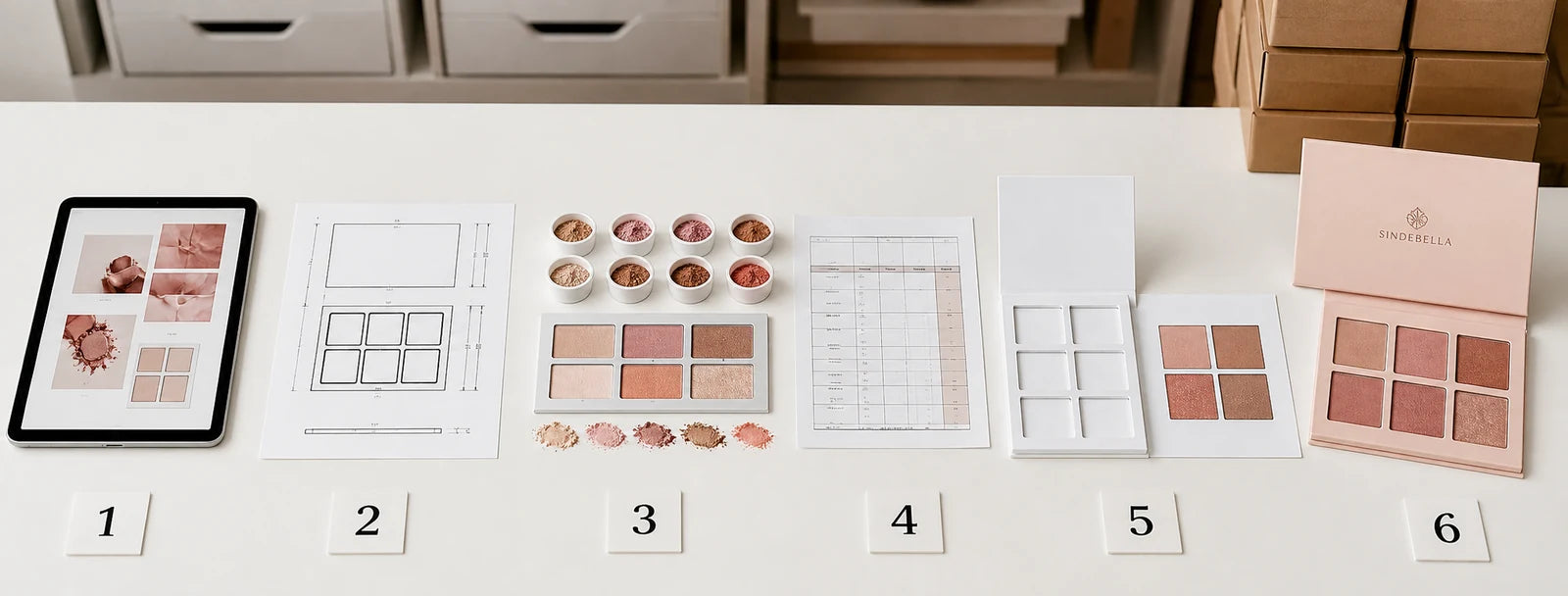
Review quantity, product, material, target market, budget, timing and the visual details that must be preserved.
Match the idea to an existing component, controlled decoration change, paper structure or new mold development.
A designer converts the concept into the required dieline, dimensioned drawing, 3D model or component specification. Paid structural design is quoted separately.
Select formula, shades, fill volume, pans, applicator and packaging so the product works as a complete system.
Confirm preliminary price, mold or sample charges, then produce the appropriate white dummy, 3D prototype, decoration sample or filled sample.
Approve dimensions, artwork, color, finish, formula and sample before bulk production is scheduled.
A practical example
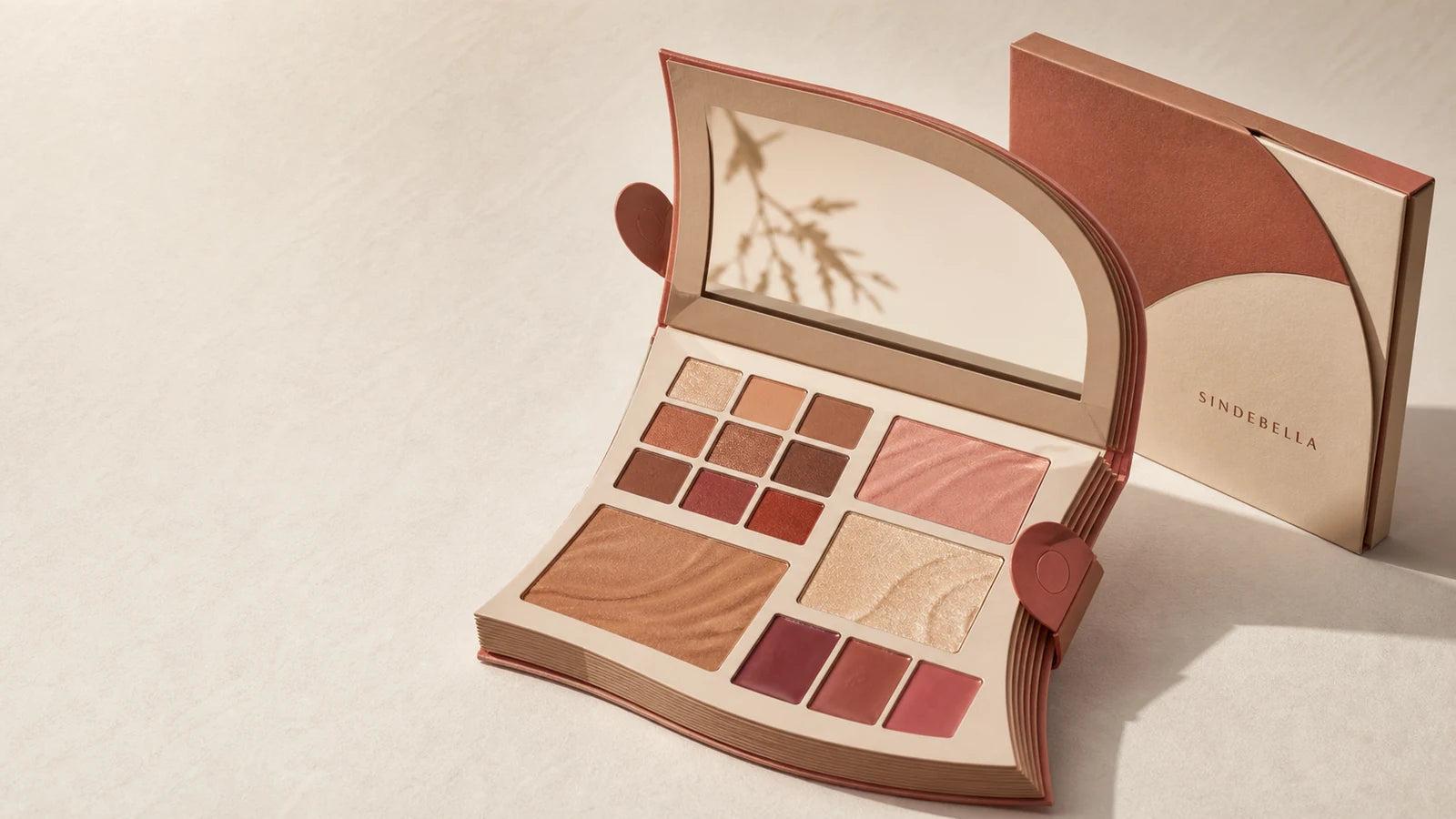
A special paperboard palette can offer custom printing, folds, mirrors, magnets and pan layouts while avoiding a new outer plastic or metal mold. This route can begin from 1,000 palettes after design review. Plastic or metal new structures generally require much higher quantities, tooling and a longer development period.
Questions buyers ask before quotation
These answers explain where an AI reference helps and where technical confirmation is still required.
We can discuss a preliminary route, but a reliable quotation needs the product, quantity, dimensions, material, formula, component and decoration specifications. A new structure may need a drawing or 3D model before final pricing.
No. Some shapes conflict with molding, wall thickness, hinge movement, closure, applicator, filling or assembly requirements. We identify the must-keep visual details and propose a workable structure.
Yes. Design and engineering support can be provided as a paid service. The fee is separate and depends on the product, structure and files required.
Often, yes. We can first review existing tubes, compacts, jars, pencils or paperboard structures. Logo printing, an outer box and selected surface finishes may achieve the intended brand direction with less tooling risk.
The sample type depends on the route. It may be a white structural dummy, digital or printed packaging sample, 3D prototype, component decoration sample, formula sample or a filled product sample.
Send the image or public link, product category, target quantity, market, budget, launch date, preferred material, approximate size and the details that must not change.
Project feasibility review
We reply by email and may follow up by WhatsApp. The first review focuses on the production route, information gaps and whether the requested quantity and budget match the concept.