
Set and extend the base
Usually a loose or pressed setting powder designed around lightweight pickup, shine control and a finish that does not look heavy.
Private label face powder manufacturer
Build a loose powder, pressed setting powder or powder foundation around setting, pore-blurring, shine-control and long-wear needs—using a mature formula or a defined custom brief.
Compare Development RoutesWhy the category still matters
A liquid or cream base creates coverage, but powder can set it, control visible shine, soften the look of texture, brighten selected areas or provide portable coverage. The strongest product briefs choose one main job instead of asking one formula to do everything.
Usually a loose or pressed setting powder designed around lightweight pickup, shine control and a finish that does not look heavy.
Usually a loose powder with a defined shade direction for the under-eye, T-zone or other targeted areas. Dust-off, color effect and application amount matter.
Usually a pressed compact for portable touch-ups. The brief should define how sheer it should be, how it picks up and whether it changes the base color.
Powder foundation needs higher pigment, a planned shade range, buildable coverage and reliable adhesion—not simply a tinted setting powder.
These are positioning directions, not automatic formula claims. The final brief still needs a product format, shade plan, application method and measurable priorities.
How to plan a face powder project
You do not need to arrive with a finished formula. Start by choosing the product format and the makeup result; those decisions determine the suitable development route, packaging and quantity.
Loose setting powder, pressed setting powder or powder foundation.
Setting, blurring, shine control, coverage, finish and shade direction.
Use a mature formula, adjust a suitable base or develop a custom direction.
Choose an existing component with logo decoration or plan for a higher custom-packaging quantity.
Which face powder fits your brand?
“Finishing,” “baking,” “blurring” and “brightening” are selling concepts. A workable development brief first identifies the product format, how customers will apply it and the result they should see.
Customer use: all-over setting, baking, targeted brightening and shine control.
Development focus: particle feel, pickup, flyaway powder, visible residue, shade effect and natural-matte or softly luminous finish.
Typical pack: sifter jar + inner puffCustomer use: portable setting, blotting and touch-ups during the day.
Development focus: color, skin feel, pickup, sheer payoff, non-cakey application and how much the shade changes the base.
Typical pack: two-tier compact + mirror + puffCustomer use: buildable complexion coverage from powder rather than setting alone.
Development focus: pigment level, skin adhesion, shade and undertone plan, coverage target and sponge-versus-brush application.
Best suited to a defined shade plan and physical sampling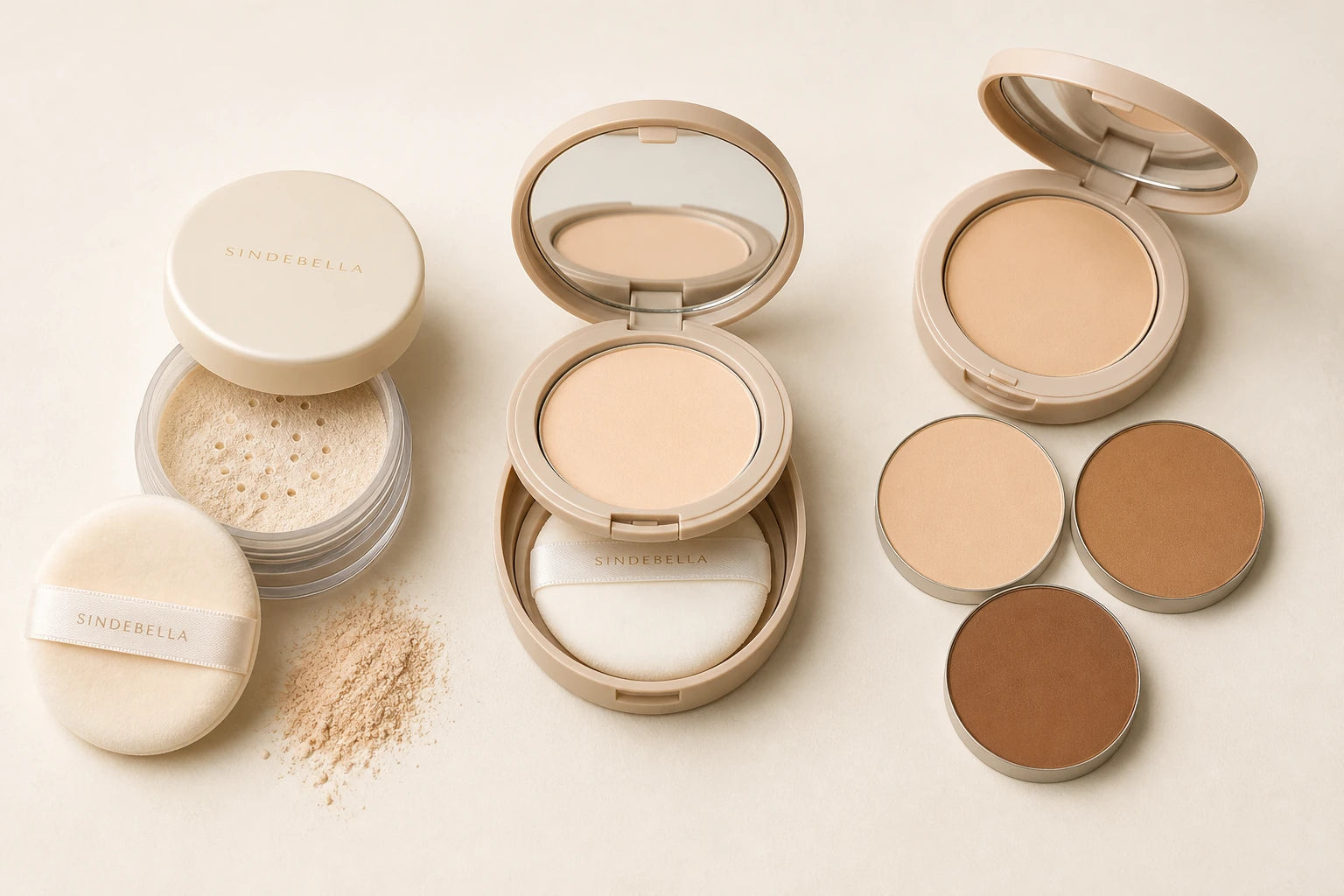
Turn the concept into a formula brief
“Silky,” “blurring” or “long-wearing” is not enough for sampling. A useful brief explains the application method, coverage, finish, oil-control expectation, shade effect and the problem the new product should improve.
Selected formulas support oil control, long wear, waterproof and sweat-resistant positioning, a lightweight non-cakey feel, blurring and shine control. The exact direction depends on the formula selected and the customer’s own wear evaluation.
Choose natural matte, soft matte or softly luminous, then define whether the product should be translucent, tinted or visibly buildable.
Explain whether the priority is everyday setting, humid-weather wear, targeted T-zone control or portable touch-up.
Confirm brush, puff or sponge use; desired pickup; spread; flyaway powder; and how much product the customer is expected to apply.
Define translucent versus tinted shades, the target skin-tone range and whether the powder should brighten, stay neutral or add visible coverage.
Project routes and quantities
The 500-piece route is for one product in one existing package. Different products or packaging styles cannot be combined to reach the minimum.
Select one mature product, existing shades and one existing package.
For a defined color adjustment or adding an agreed skincare-ingredient direction to a suitable formula.
For more substantial changes to payoff, finish, feel or product performance.
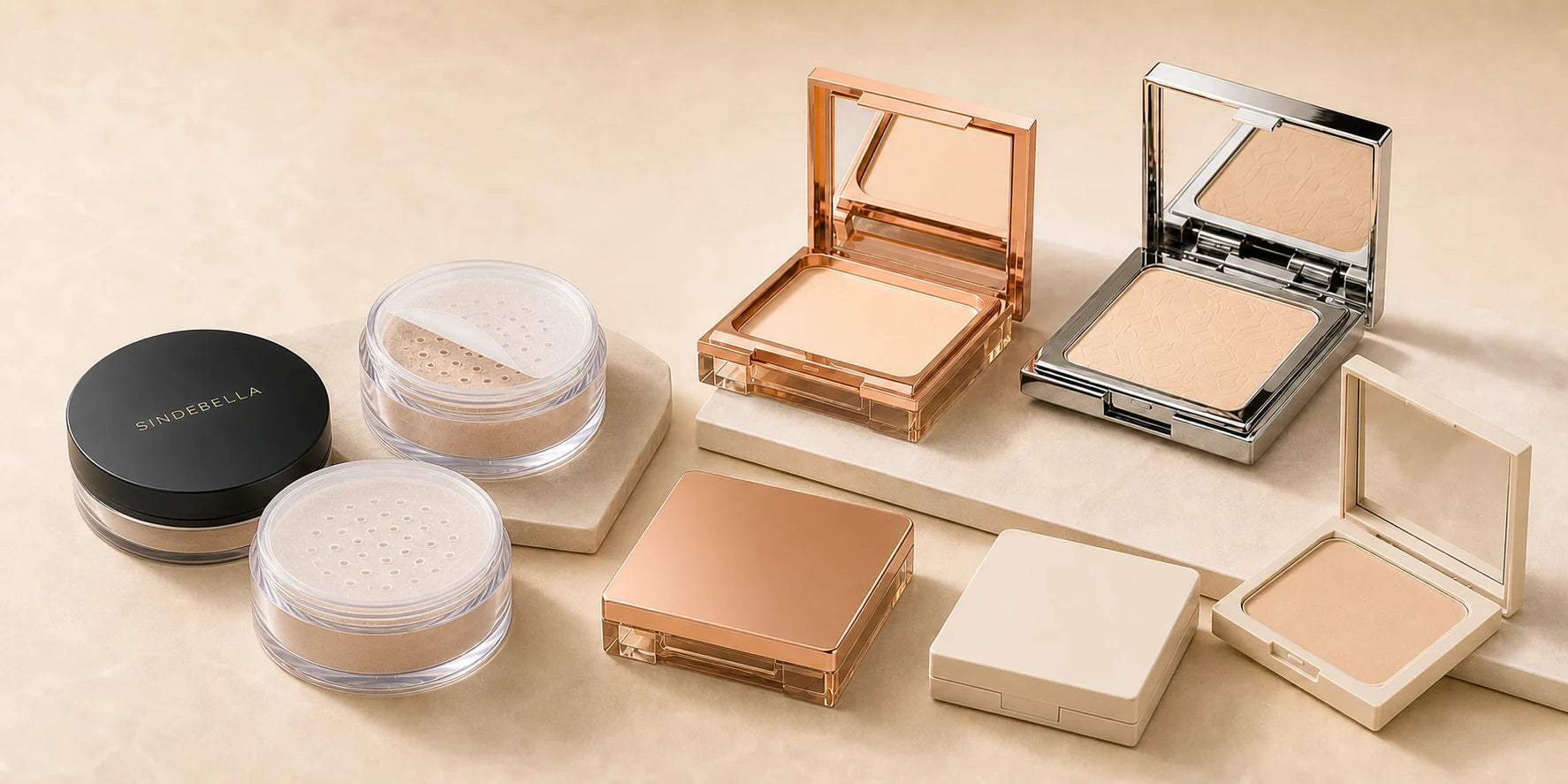
Packaging has its own MOQ
Net weight depends on the selected container. Typical references are 10–25 g for loose powder and 9–12 g for pressed powder.
A typical stock route uses a sifter jar with an inner puff. A protective film covers the sifter before first use; the customer removes it to begin dispensing powder.
A typical stock route uses a two-tier compact with mirror and puff. Pan size, pressing setup and compact fit must stay compatible.
Logo hot stamping, silk-screen printing and color UV printing are available. Custom surface treatment, component color or a different structure usually moves packaging to 6,000–10,000 pieces.
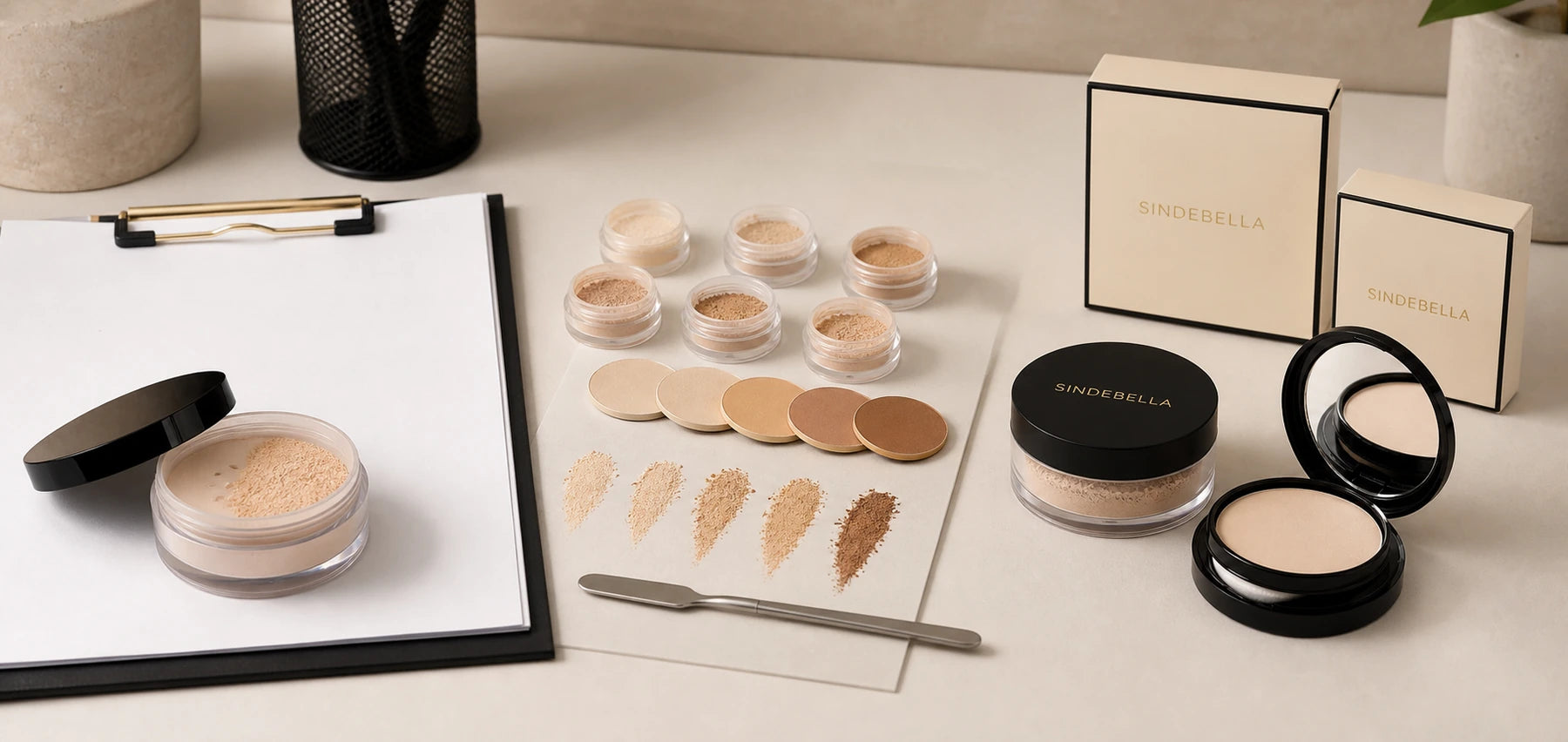
Sampling and approval
Our laboratory checks the requested color direction, how the powder sits on skin, visible flyaway powder and whether the application appears cakey.
The customer tests oil control, wear, application and the real result on the intended users. These use conditions cannot be replaced by a brief laboratory check.
The US$100–200 custom-formula sampling fee covers the first sample and up to two free adjustments based on clear customer feedback.
Please send sample feedback within two weeks of receipt. If more testing time is needed, tell us before the deadline; otherwise the sample is treated as accepted without further adjustment.
Formula sampling is normally about 15 working days. Formula plus packaging sampling normally takes 20–25 working days. Estimated production: 15–25 working days for 100–500 pieces, 25–35 for 1,000–3,000, and 35–45 for 6,000–10,000. Timing is reconfirmed against the approved formula, shade count, packaging and current production schedule.
Frequently asked questions
A mature formula with existing shades and one existing package starts from 500 pieces per product and packaging style. Available shades can be mixed from 100 pieces per color. Different products or different packages cannot be combined to reach 500 pieces.
A defined shade adjustment or agreed skincare-ingredient direction normally starts from 1,000 pieces per color. More substantial changes to payoff, finish, feel or performance commonly require 1,000–3,000 pieces per color.
The marketing concept can be different, but most projects are still produced as loose powder or pressed setting powder. The brief should define how the product is used, the expected finish and whether it is translucent or tinted.
Yes, selected formulas include talc-free or mineral-based directions, and vegan or cruelty-free options are also available. Because the ingredient list varies by formula, review the current product formula before choosing or request a custom brief.
No. Camera-flash testing is not part of our routine sample review. Customers should test the sample under their intended application, skin-tone and photography conditions before approval.
Loose powder commonly uses a sifter jar with protective film and an inner puff. Pressed powder commonly uses a two-tier compact with mirror and puff. Capacity depends on the selected component.
The 500-piece route uses an existing package with logo decoration. Component surface treatment, custom color or a different structure normally requires 6,000–10,000 pieces. Private molds are quoted separately.
Qualified project inquiry
Tell us whether you need loose powder, pressed setting powder or powder foundation, and define the finish, shade plan, packaging and quantity.