
Dior
Dior Addict Lip Maximizer
Hyaluronic acid + cherry oil
A plumping and hydration story paired with mirror-like shine and a comfortable lip-care direction.
Custom lip gloss ingredient guide
Choose an ingredient direction after defining the intended shine, texture, color, scent and market. The laboratory then confirms whether a mature base, controlled addition or new formula is the practical route.
How brands build an ingredient story
Major lip gloss and lip oil launches often connect one recognisable ingredient story with a clear sensory result. These public examples can help you define a direction before asking a laboratory to develop it.
Dior
Hyaluronic acid + cherry oil
A plumping and hydration story paired with mirror-like shine and a comfortable lip-care direction.
Maybelline
Hyaluronic acid
The ingredient story supports a high-shine, fuller-looking and non-sticky mass-market gloss position.
Fenty Beauty
Shea butter + vitamin E + peptide
Combines explosive shine with conditioning and moisture-barrier care language.
e.l.f. Cosmetics
Squalane + apricot, avocado, jojoba and pomegranate oils
A multi-oil story built around sheer color, high gloss, a non-sticky feel and a fresh minty scent.
NYX Professional Makeup
Cloudberry oil + raspberry oil + squalane
A lip oil–gloss hybrid story that connects buildable color, high shine and extended hydration.
Clarins
Sweetbriar rose oil + jojoba oil + hazelnut oil
A plant-oil care story focused on comfort, nourishment, shine and visibly plumper-looking lips.
These examples describe public brand positioning, not transferable recipes. Using the same ingredient name does not reproduce another brand's texture, performance or tested claim. The exact raw material, level, base formula and evidence must still be reviewed.
Ingredient choices and formula impact
Start with the result you want. Each category below shows the main formula or packaging point the laboratory reviews before confirming a sample route.
Mature formula or new development
A suitable hero ingredient can often be introduced at a controlled level after laboratory review. Replacing the base formula system or combining many tightly defined requests normally requires deeper development.
Start with a suitable existing formula when the brand is flexible about the ingredient list and wants to prioritize finish, feel, shade and stock packaging.
Private-label route from 500 pieces; available shades can normally be mixed from 100 per color.
A simple addition at a normal, compatible level can often be reviewed without replacing the complete base system.
Normally 500–3,000 pieces per shade, depending on the ingredient and requested changes.
Use this route when the project replaces major parts of the base formula or combines tightly defined ingredient, texture, performance and packaging requirements.
Normally 1,000–5,000 pieces per shade; final MOQ follows technical review.
First define shine, thickness, color payoff, scent, comfort, target market and packaging. Then the laboratory can judge whether the requested hero ingredient supports that result.
From idea to sample
Share the ingredient idea and the reason behind it. We review whether it is suitable before confirming the sampling route.
Tell us why the ingredient matters, the target customer, market, product reference and planned claim direction.
We compare the request with available bases and check whether a controlled addition or new development is more realistic.
The formula route, ingredient information needed, packaging direction, sample fee and timing are confirmed before work begins.
Evaluate shine, viscosity, color, scent, pickup, application and comfort; then give specific feedback for adjustment.
Custom formula sampling is normally US$100–500. The first sample commonly takes 2–4 weeks and includes two feedback adjustment rounds, depending on the brief.
Confirmed factory experience
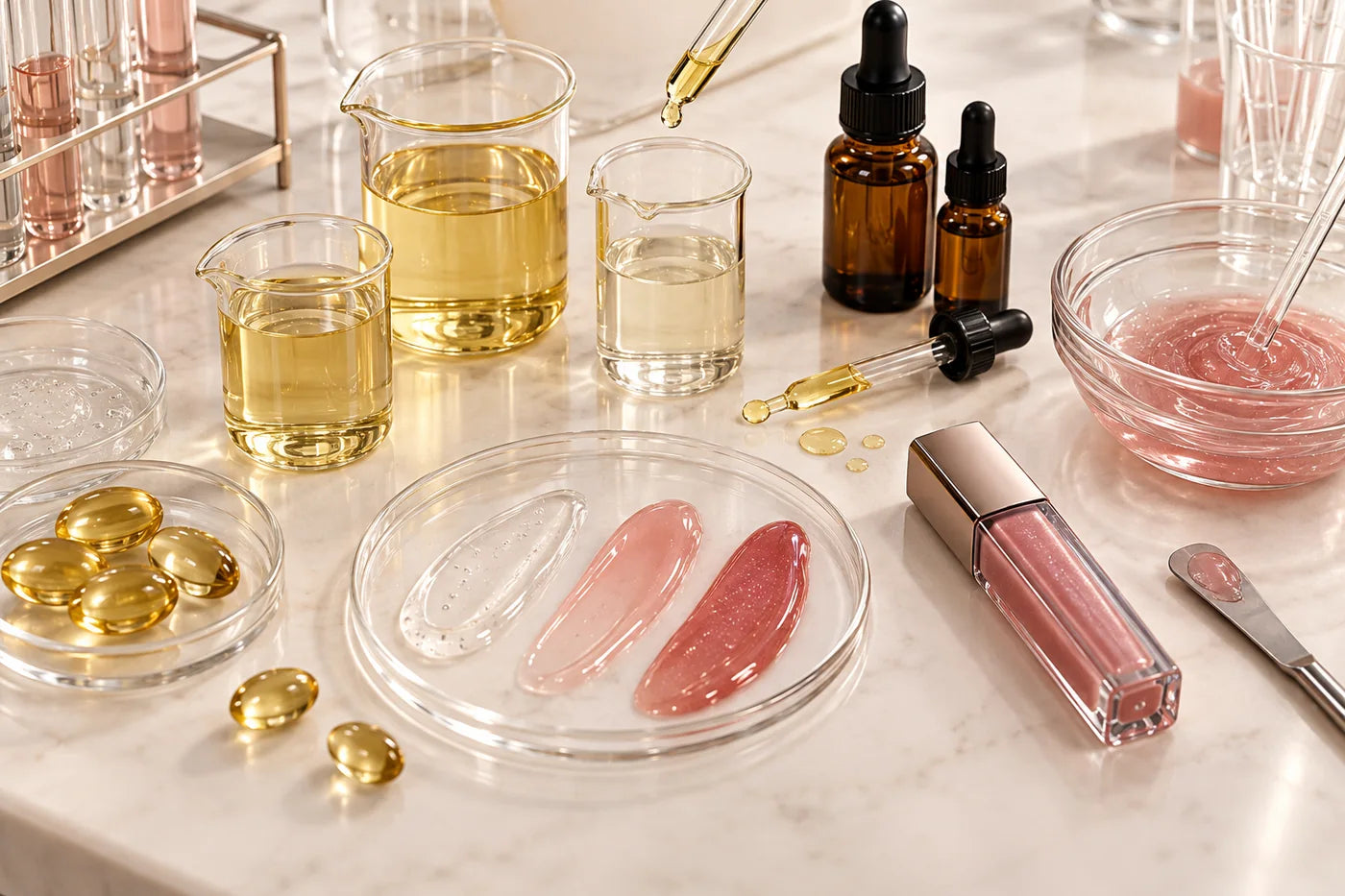
Across different gloss formulas, our laboratory has worked with olive oil, jojoba oil, grapeseed oil, vitamin E and peptide directions. Their use still depends on the selected base, addition level and marketing brief.
Reviewed within a compatible emollient system.
Used in selected formulas for slip and conditioning direction.
Assessed as part of the full oil system.
Reviewed at a suitable level in a compatible base.
Requires the exact raw material, files and claim direction.
A mature formula is a balanced system. A hero ingredient should support the product brief—not be added simply to lengthen the ingredient list.
Questions brand teams ask
Use these answers to prepare a more practical custom formula brief.
Not every form is suitable for an oil-based gloss. The laboratory needs the exact raw material or marketing direction before confirming whether a compatible grade or delivery system can be used.
Often yes, when the addition is technically suitable and used at a normal level. The laboratory confirms feasibility before sampling. If the request replaces the underlying base system, a new formula is required.
No. Ingredient presence and finished-product performance are different questions. The planned claim, ingredient documentation and any supporting finished-product evidence should be reviewed separately.
Send the ingredient name or supplier reference, marketing reason, desired finish and texture, shades, quantity, target market, packaging reference and must-have or must-avoid requirements. Custom formula sampling is normally US$100–500, takes 2–4 weeks for the first sample and includes two feedback adjustment rounds, depending on the brief.
Compare full formula routes or review the broader private-label lip gloss service.
Ingredient and formula project review
Tell us the product result, preferred hero ingredient, shade count, quantity, market and packaging direction. We will review whether a mature formula, controlled adjustment or new development is more suitable.
Every special ingredient request is confirmed by the laboratory before sampling. If available, include the raw material name, supplier reference or a public product link.