

Liquid Lipstick
Key features: Matte or velvet finish direction, with shade, applicator, logo and packaging planning.
Request this productVegan color cosmetics manufacturer
Develop private label vegan color cosmetics with SindeBella, a China-based makeup manufacturer. Explore suitable formulas, custom shades, logo printing and packaging options, with vegan suitability reviewed for each selected product.
Vegan makeup explained
A vegan makeup formula excludes animal-derived ingredients, by-products and derivatives. In color cosmetics, reading an INCI list is an important starting point, but it may not be enough: some raw materials can have different possible origins, and the origin relevant to the selected formula must be checked.
A product-specific review should also consider supplier information and market requirements. Vegan is not another word for organic, natural or cruelty-free, and does not automatically mean safer, more sustainable or better performing.
Ingredient screening
The examples below are procurement screening examples—not a statement that they are used in SindeBella formulas. They show why origin evidence can be necessary before confirming a vegan claim.
| Ingredient | Why it matters | What brands should check |
|---|---|---|
| Beeswax / Cera Alba | A bee-derived wax; it is not suitable for a vegan formula. | Whether the selected formula contains beeswax, or an alternative has been specified and documented. |
| Carmine / CI 75470 | An insect-derived red colorant from cochineal; it is not suitable for a vegan formula. | Whether it is present in the selected shade and whether an alternative color direction is needed. |
| Lanolin | A material derived from sheep wool; it is not suitable for a vegan formula. | Whether the formula uses lanolin or an alternative, plus the relevant raw-material information. |
| Shellac | A resin derived from lac insects; it is not suitable for a vegan formula. | Whether it is used in the formula, film-forming system or coating route. |
| Guanine | A pearlescent material that can be fish-derived; its actual pigment source must be checked. | Origin of the effect pigment used for the selected finish or shade. |
| Glycerin | Its source can vary; actual feedstock origin must be checked. | Actual supplier-origin information for the selected formula. |
| Stearic Acid | Its source can be plant or animal feedstock; actual origin must be checked. | Actual source declaration for the specific raw material. |
| Squalane | Its source can vary; actual raw-material origin must be checked. | Source information for the selected raw material and formula version. |
Reference standard: The Vegan Society — Vegan Trademark Standards. Brand-specific claims must still be reviewed against the actual selected formula and market requirement.
Product development options
These products represent development options. Vegan suitability and supporting documentation are reviewed for each selected formula before product-specific claims are confirmed.
Key features: Matte or velvet finish direction, with shade, applicator, logo and packaging planning.
Request this product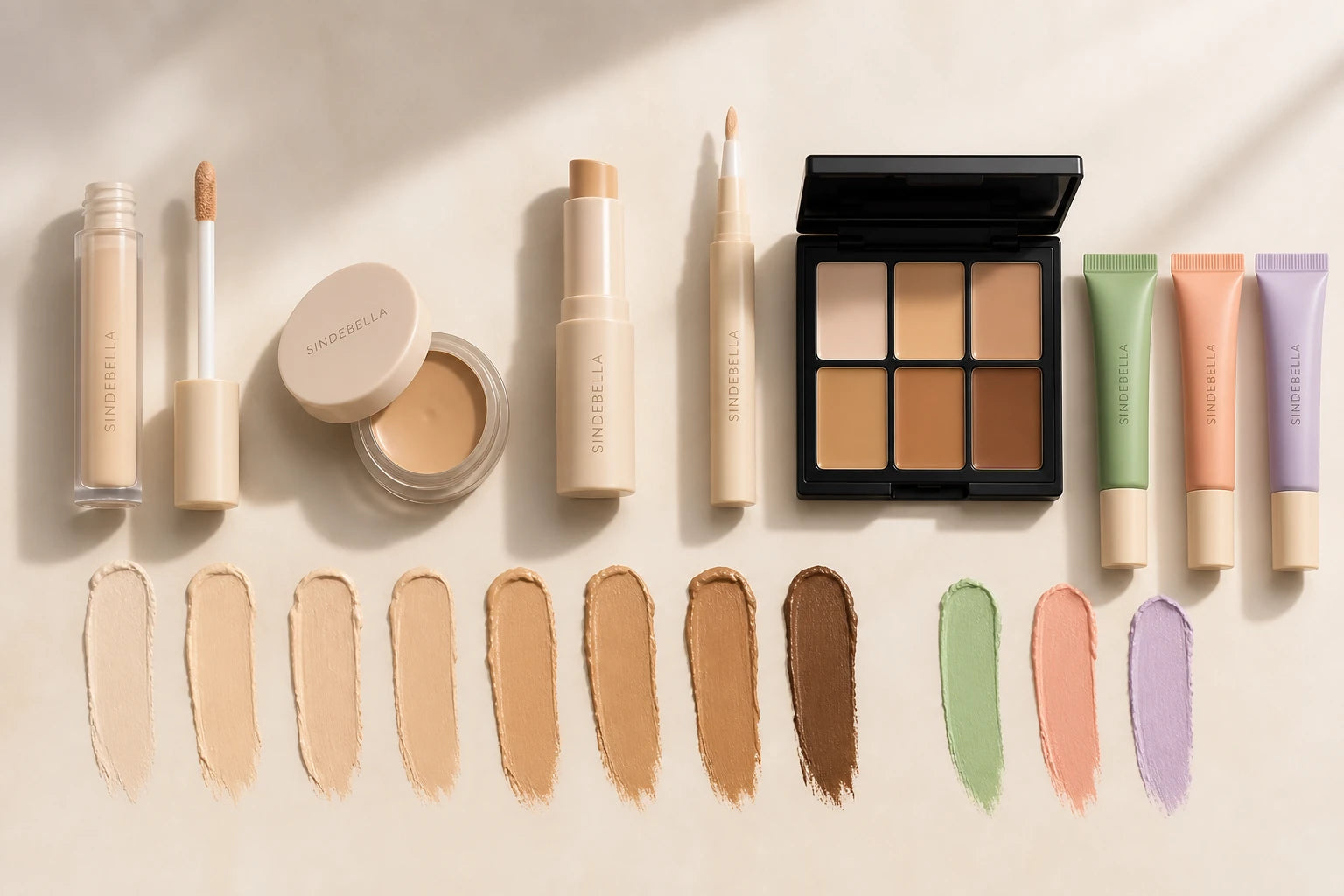
Key features: Coverage, skin feel, finish and complexion shade range are defined before formula review.
Request this product
Key features: Color payoff, finish, shade story and packaging route are assessed for the selected product.
Request this product
Key features: Retractable brow pencil direction, assessed for formula, shade and component suitability.
Request this productClaim confirmation process
The purpose is to define what can be supported for the selected product. A normal INCI list, MSDS, COA or formula sheet is not by itself a vegan certification.
Confirm the exact product, formula version, finish and any requested changes.
Identify animal-origin risks and raw materials whose origin requires further confirmation.
Review available supplier and raw-material origin information for the selected formula.
Define whether a factory declaration is supportable or third-party certification needs separate scope.
INCI list identifies ingredients, but may not show source. Raw material origin declaration supports source review. A factory vegan declaration needs adequate product-specific support. Third-party certification is a separate process and authorization.
The SKU remains under review. Formula, pigment, source material or version changes require renewed review. This page does not claim a dedicated vegan production line.
Collection customization
Customization starts with the product result the brand needs. If formula or raw-material changes are made, vegan-claim suitability is rechecked for the changed version.
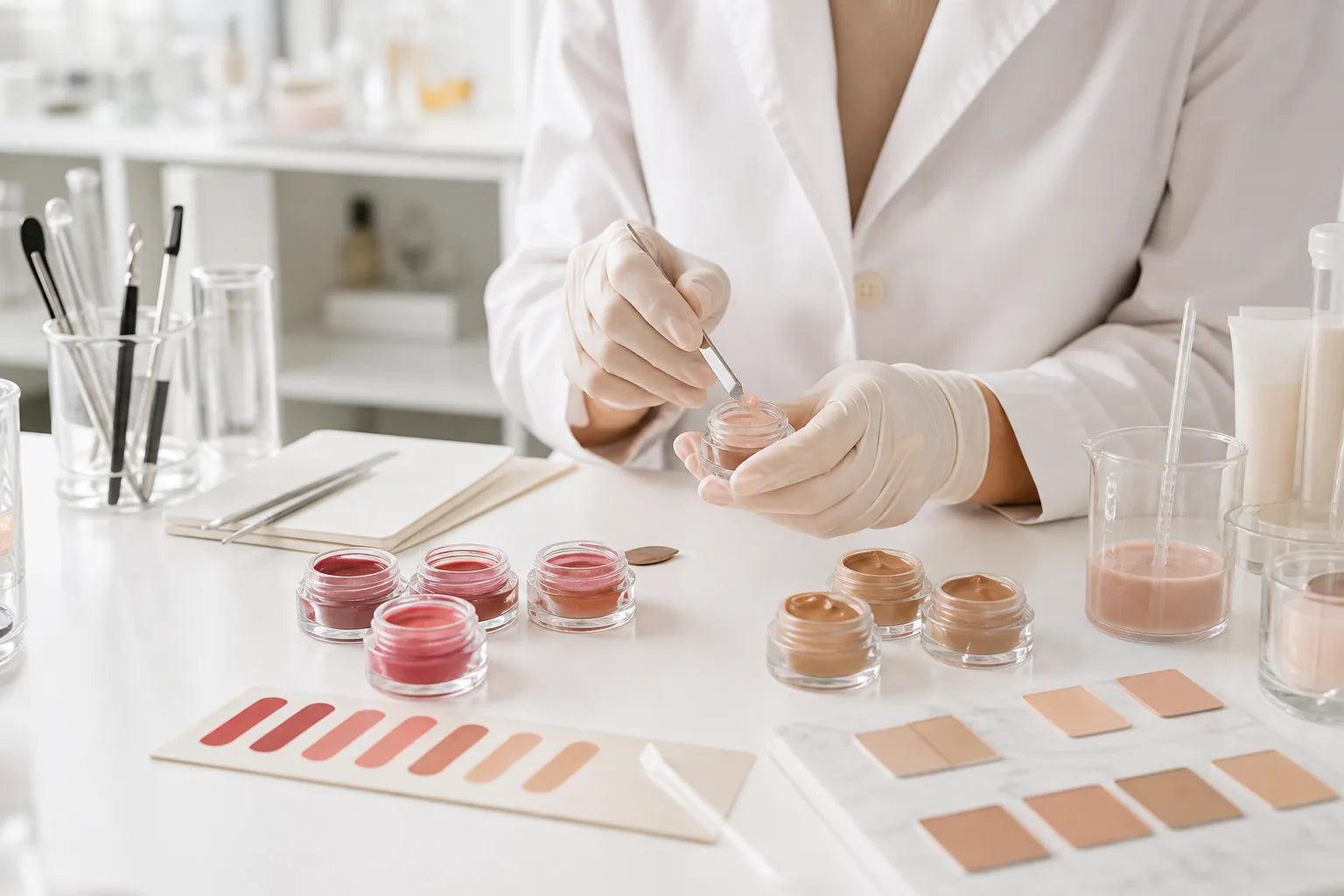
Select a suitable existing formula or define the target texture, finish and performance for further development.
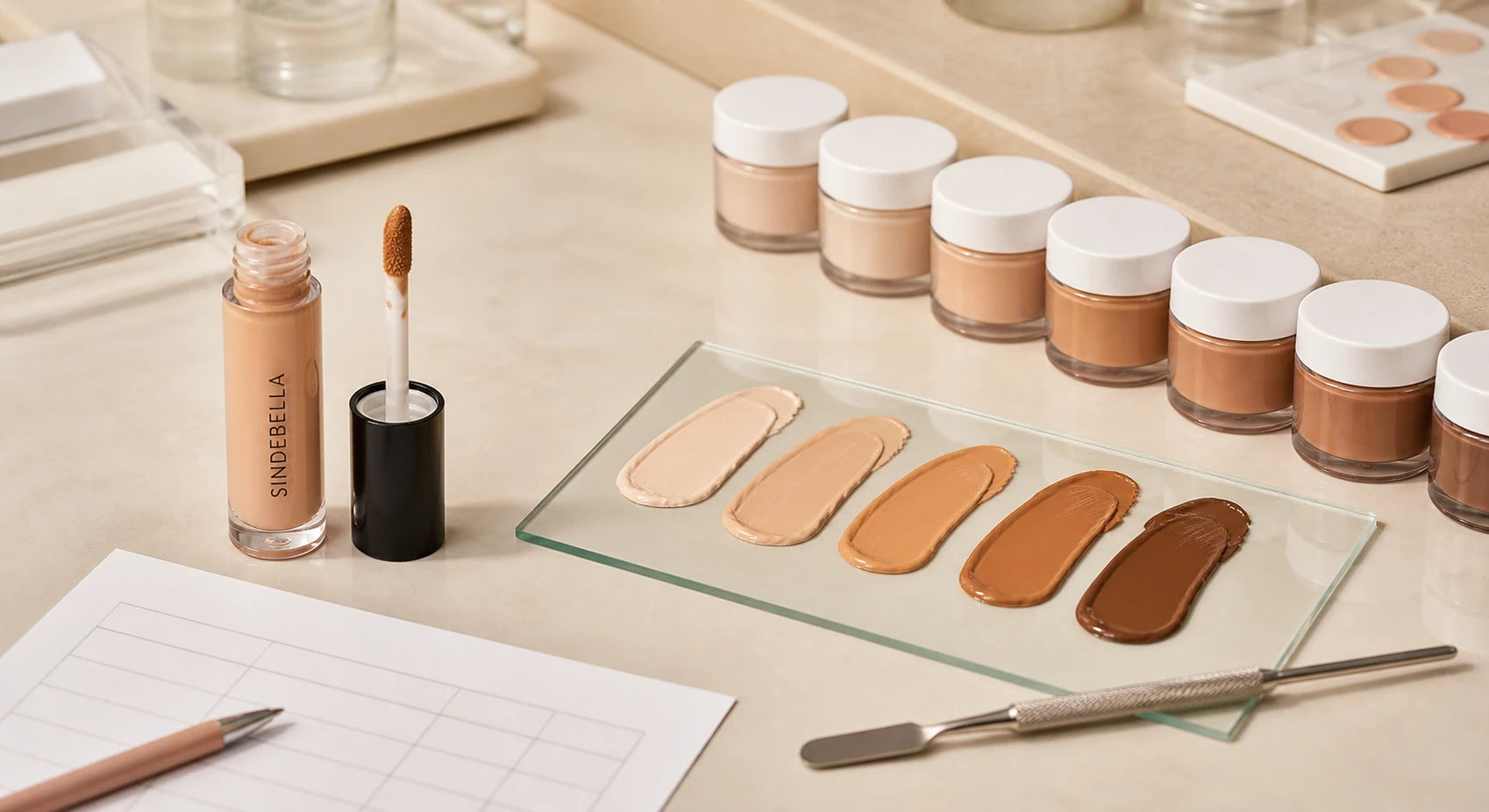
Confirm shade count, color direction, pigment requirement and sample plan.
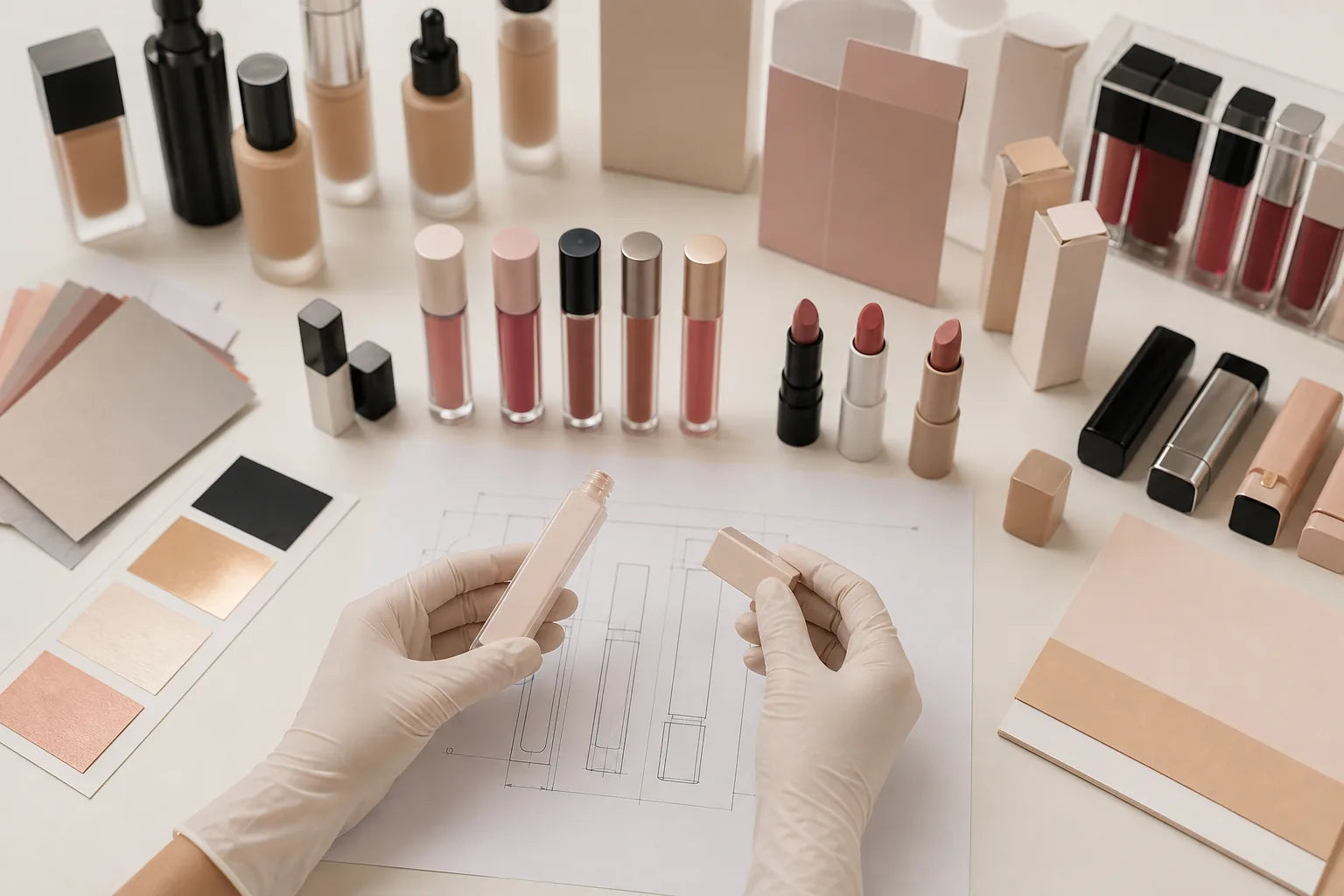
Choose existing compatible packaging for logo decoration, or assess component color, printing, surface finish and new structure requirements.
Project planning
MOQ follows the product, formula, packaging and customization route. It is reviewed after the brand has defined what it wants to develop.
Some suitable private-label products may begin from 500 pcs per product with existing packaging, depending on the selected product route.
OEM formula or deeper custom-shade development commonly starts from 1,000 pcs per shade. Product-specific evaluation is required.
Samples are planned after product and customization requirements are understood. Packaging development may have separate component requirements.
Documentation support
These are different evidence and claim categories. Their availability depends on the selected formula, product scope and market requirement; they are not automatic for every project.
Available product and formula information can be discussed for the selected product route.
Supplier and source information is reviewed where it is available and relevant to the selected formula.
May be discussed only when adequate product-specific support is available for the selected formula.
Not automatic. Scope, authorization, market requirement, timing and cost must be confirmed separately.
We can discuss the selected formula version, available ingredient-origin support, claim limitations and any unresolved materials. You will then receive a practical route: test an existing formula, adjust a suitable base, or scope new development. A declaration or third-party document is discussed only where the selected SKU and evidence support it.
Working process
The project begins with the product and desired customization. Sampling happens after the route is clear, and bulk production follows final sample approval.
Start your project
Share your product ideas, formula preferences and packaging requirements to discuss a suitable development route.
Buyer questions
A vegan formula excludes animal-derived ingredients, by-products and derivatives. The selected product needs ingredient-origin review because an INCI name alone may not reveal the source of every raw material.
We identify the selected formula and version, screen relevant ingredients, then review available supplier and origin information.
Lip, face, eye, brow and pencil directions can be evaluated. The exact formula, finish, pigment system and component must be selected before status can be confirmed.
Yes. Suitable existing formulas, formula adjustments, custom shades and packaging changes can be reviewed.
Some private-label products may begin from 500 pcs per product where supported. OEM development commonly starts from 1,000 pcs per shade.
Where sufficient product-specific support is available, a factory vegan declaration and relevant formula information can be discussed. Third-party certification is not automatic.